
How much pressure can the walls of a lightweight steel villa withstand?
2024-07-14 20:50
Lightweight steel villas have gained widespread attention as a new type of construction due to their lightweight, eco-friendly, and durable characteristics. The load-bearing capacity of the walls is a crucial indicator for assessing the structural safety and stability of lightweight steel villas. This analysis will detail aspects such as material properties, design standards, and load-bearing capacity.
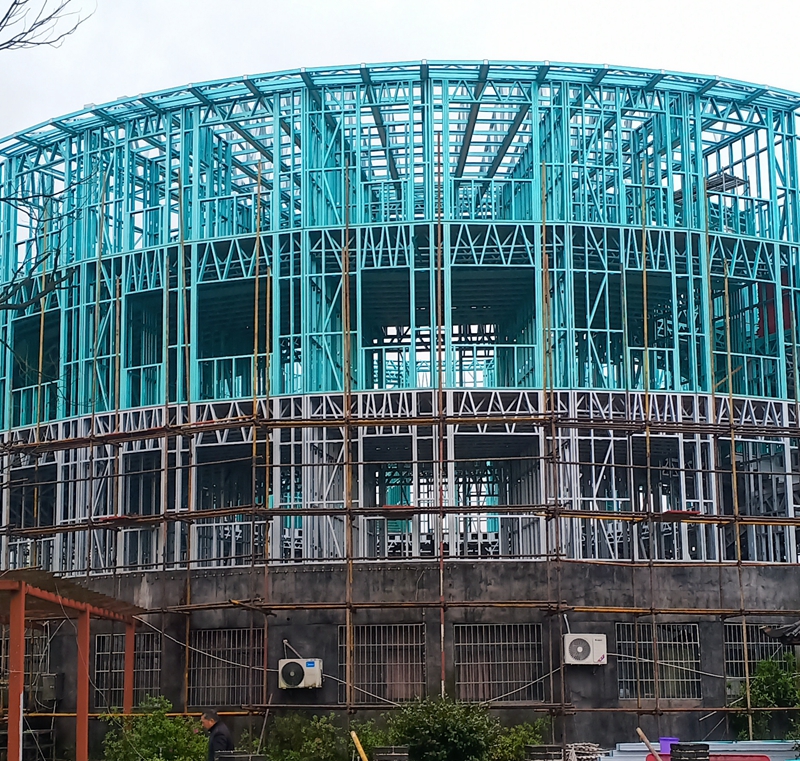
1. Characteristics of Lightweight Steel Materials
1. High Strength and Lightweight: Lightweight steel materials are typically made from high-strength steel with a strength of 235-550 MPa and a low density, usually around 7.85 g/cm3. This allows lightweight steel structures to reduce the overall building weight while supporting the same load, thereby enhancing seismic performance.
2. Good Ductility: Lightweight steel possesses excellent plasticity and ductility, allowing it to effectively absorb energy during compression or tension, preventing brittle fracture.
3. Corrosion Resistance: Modern lightweight steel villas often use hot-dip galvanization or spray coatings to enhance corrosion resistance, extending their service life.
2. Wall Structure of Lightweight Steel Villas
1. Structural Form: The walls of lightweight steel villas are generally composed of lightweight steel frames, insulation materials, and inner and outer wall materials (such as gypsum board, fiber cement board, etc.). The frames bear the primary structural loads, insulation materials provide thermal resistance, and the wall surfaces offer protection and aesthetics.
2. Composite Structure: By combining multiple materials, the walls of lightweight steel villas can utilize various advantages. Composite walls have greater stiffness and strength compared to single materials, enabling them to better support external pressures.
3. Load-Bearing Capacity Calculation
1. Design Standards: The design of lightweight steel villas usually follows national and regional building codes, such as the "Code for Design of Building Structures Load" GB 50009 and the "Code for Design of Steel Structures" GB 50017. These codes provide the foundational design standards for wall load-bearing capacity.
2. Load Analysis:
Dead Load: This includes the weight of the wall itself, roofs, floors, and other fixed components.
Live Load: This encompasses loads generated during use, such as furniture and equipment.
Wind and Snow Load: Depending on the climate conditions of the building's location, the walls must withstand specific wind and snow pressures.
3. Load-Bearing Capacity Assessment:
For lightweight steel walls, the limit state design method is commonly used to ensure the structure remains safe and stable under maximum load conditions.
Typically, the load-bearing capacity of lightweight steel walls ranges from 150 to 300 kN/m2, but specific values need to be confirmed through detailed design calculations.
4. Factors Influencing Load-Bearing Capacity
1. Wall Thickness and Height: The thickness and height of the walls directly impact load-bearing capacity. Thicker walls can support greater pressure but also increase material costs and weight.
2. Joint Connections: The design of joints in lightweight steel structures is critical. Well-designed connections can significantly enhance the overall load-bearing capacity of the structure.
3. Construction Quality: The quality of construction, including the assembly, welding, and reinforcement of lightweight walls, directly influences their load-bearing capacity. Ensuring high construction quality is vital for structural safety.
5. Conclusion
The walls of lightweight steel villas possess good load-bearing capacity, capable of meeting diverse usage requirements and environmental conditions. Adhering to relevant codes, considering various influencing factors, and conducting scientific load-bearing capacity calculations are key to ensuring the safety of lightweight steel villas. With the continuous advancement of lightweight construction technology, the load-bearing capacity of lightweight steel villas is expected to improve further, leading to broader application areas in the future.